Spark: Daily Learning Puzzles
The Mind CompanyEducation
4.5192.00 Reviews
- Version
- 1.41.0
- Installs
- 100.00K
- Age Rating
- Everyone
Screenshots
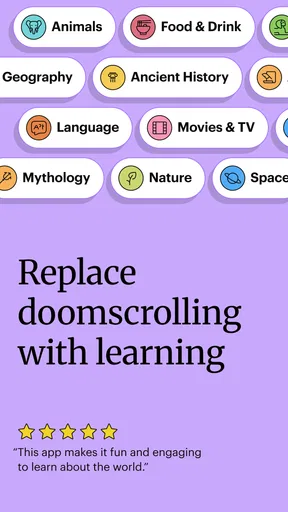
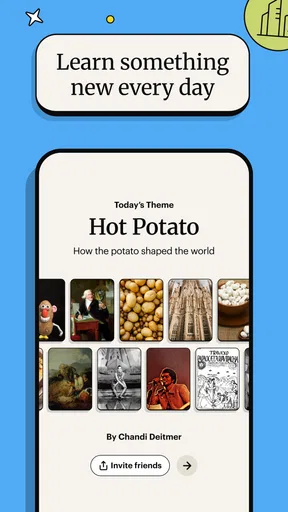
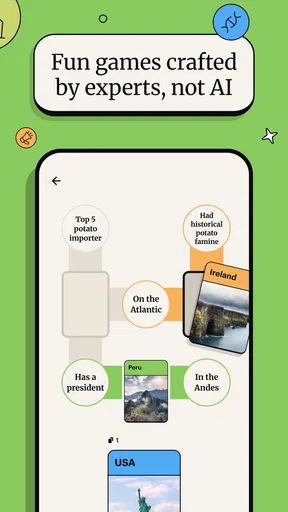
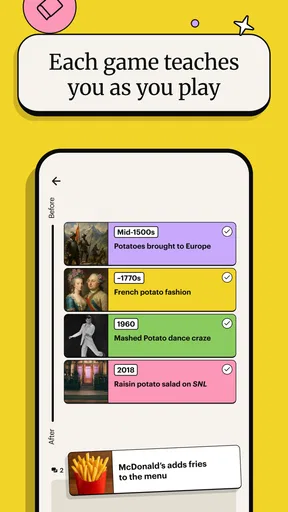
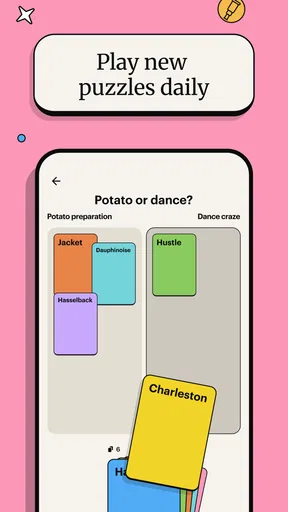
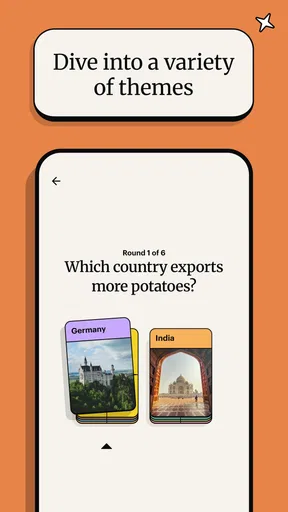

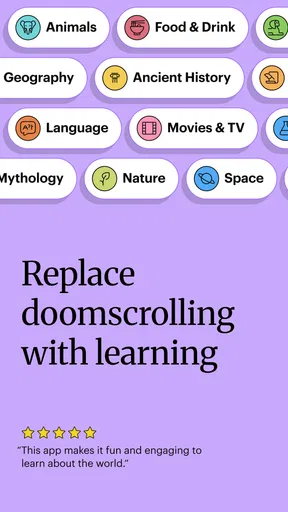
Our Review of Spark: Daily Learning Puzzles
 Analysis by Appyee
I approached Spark: Daily Learning Puzzles as a small daily study tool rather than a traditional course app. That distinction matters. This is an education app from The Mind Company built around learning through puzzles, and its appeal comes from making short bursts of attention feel more approachable than opening a textbook or committing to a full lesson. After spending time with it, I found the concept easy to understand: instead of asking me to sit through a long explanation, it encourages me to think through a compact challenge and treat the answer as the learning moment.
That format will not suit everyone, but it does solve a familiar problem. Many people want to learn regularly and still struggle to create a routine. A puzzle is a smaller invitation than a chapter, lecture, or lengthy quiz. I could imagine using it during a morning coffee, while waiting for an appointment, or as a deliberate break from social media. The experience feels most useful when I treat it as a daily mental habit, not as a replacement for a complete educational program.
How Spark feels in its current form
The current release is version 1.41.0, and the app is available free of charge with optional in-app purchases ranging from $2.99 to $79.99 per item. The free entry point makes it relatively easy to try without making an immediate commitment. At the same time, anyone considering a longer-term routine should look carefully at which parts remain accessible without payment and whether the available purchase is worthwhile for their personal use.
Its store summary, “Learn something new, one puzzle at a time,” describes the central idea accurately without telling the whole story. The important practical detail is the change in mindset: I am not opening Spark expecting a complete course structure. I am opening it for a focused challenge that may introduce an idea, test recall, or make me look at a familiar subject differently.
The short description is simply “Spark,” which is memorable but not especially informative on its own. The app becomes clearer once its puzzle-based approach is understood. It belongs in the education category, yet it feels lighter and more recreational than many conventional learning apps. That can be a strength for people who avoid formal study tools, although it can also feel limited to users who want detailed explanations, organized curricula, or visible academic progression.
A routine-friendly alternative to heavier learning apps
Compared with video-course platforms, Spark asks for less time and less patience before getting to the point. I do not have to watch a long presentation before discovering whether the subject interests me. Compared with flashcard apps, the puzzle framing can feel more active because I am trying to reason through a prompt rather than simply recognize an answer. Compared with general brain-training products, its education positioning gives the activity a more knowledge-oriented purpose instead of focusing only on speed or repetition.
That comparison also reveals the trade-off. A course app is better when I need a planned sequence and substantial teaching. A flashcard system is usually better when I need precise memorization, such as vocabulary or definitions. A notebook, book, or search engine remains better when I want to investigate a topic deeply. Spark sits between those choices: more engaging than passive reading for a quick session, but not a substitute for serious study.
Where the puzzle format earns its place
The strongest use case is the “small gap” in a day. I can picture a commuter using it before arriving at work, a student using it as a warm-up before studying, or an adult learner returning to a subject after a long break. The low-pressure format helps remove the feeling that learning must begin with an hour of uninterrupted concentration.
I also like the possibility of using a puzzle as a conversation starter. If a question catches my attention, I can carry it into a lunch discussion or use it as a prompt for further reading. That is more valuable than simply completing an activity and forgetting it. My practical advice is to pause after an interesting puzzle and write down one follow-up question. That tiny step turns a short interaction into a more durable learning path.
Another useful workflow is to avoid treating every session as a test of intelligence. When I get an answer wrong, the productive response is to identify what confused me: the wording, a missing fact, or an assumption I made too quickly. Keeping a short note of those patterns can reveal whether I need more background knowledge or simply need to read questions more carefully. This makes the app more useful than a quick streak-chasing habit.
What the current version means for new and returning users
For a new user, version 1.41.0 suggests a mature enough starting point to judge the basic concept rather than an early experiment. I would begin with a few sessions at different times of day instead of deciding after one puzzle. The format may feel effortless when I am curious and slightly frustrating when I want direct instruction, so a fair trial should include both moods.
For someone returning after an earlier installation, the sensible approach is to check the current flow rather than rely on old impressions. Apps change in small ways through revisions, and even a minor adjustment to navigation or puzzle presentation can affect whether a daily habit survives. The present version is the one that matters when deciding whether to reinstall, especially if an earlier experience felt rough or incomplete.
The release date is November 12, 2025, which places the app in a relatively recent stage of its public life. I would therefore separate what is available now from what I might hope to see later. The current experience should be judged on its existing puzzle routine, not on imagined future subjects, features, or learning systems.
The app supports operating systems from version 10 onward. That is useful for people using reasonably recent devices, but it is worth checking compatibility before planning to install it on an older phone or tablet. The Everyone content rating also makes it approachable for a broad audience, although an age label alone does not tell me whether the educational level will match a particular child, teenager, or adult. Parents and teachers should still try the actual material themselves before recommending it for structured learning.
Small habits that make the experience more effective
I found three habits especially sensible for this kind of app. First, use it at a consistent trigger rather than waiting to feel motivated. Opening it after breakfast or before putting the phone away at night gives the puzzle a natural place in the day. Second, do not rush simply because the activity is short. The value is in thinking, not in finishing as quickly as possible. Third, connect an unfamiliar answer to something already known. A new fact remembered in isolation is fragile; a new fact attached to a personal example has a better chance of staying useful.
A fourth habit is to separate entertainment from mastery. Completing a puzzle can create a satisfying sense of progress, but that feeling is not the same as being able to explain the subject later. If a topic matters, I would spend a few extra minutes checking a reliable book or reference source after the session. Spark works well as the starting point for that investigation, especially when a question exposes a gap in my knowledge.
There is also a practical payment decision. Because the app is free to start and includes optional purchases, I would not buy anything during the first session. I would first establish whether the daily format actually fits my routine, then decide whether the paid item improves the experience enough to justify its cost. The lowest listed purchase is $2.99, while the highest is $79.99 per item, so the difference between casually trying the app and making a substantial commitment is significant.
Where I still feel friction
The puzzle format can make learning feel accessible, but it can also oversimplify complicated subjects. A short prompt may introduce an idea without giving enough context to understand its exceptions, history, or practical consequences. I would be cautious about treating a correct answer as complete knowledge. Spark is strongest as a doorway into a subject, not as the only source I use for nuanced topics.
It may also disappoint users who need a visible syllabus. If my goal is to prepare for an exam, follow a professional curriculum, or measure progress against specific learning objectives, I would choose a dedicated course or study system first. A daily puzzle can support that plan, but it is unlikely to replace the structure, repetition, and depth those goals require.
Another limitation is motivational rather than technical. Short activities are easy to begin, but their lightness can make them easy to dismiss. If I miss several days, the habit may lose momentum unless I deliberately restart. I would not judge the app by whether it creates motivation automatically. Its better role is to make the first step small enough that I can provide the consistency myself.
People who dislike learning through questions may also find the format tiring. Some users want an explanation first and a quiz afterward. Others prefer reading at their own pace, highlighting passages, and returning to difficult sections. For them, a puzzle-first approach may feel like being asked to prove knowledge before receiving enough teaching. That is not a flaw in every context, but it is a clear reason to choose a different educational tool.
Who should try it, and who should skip it
I would recommend Spark to curious adults, students looking for a short warm-up, and anyone who wants to replace a few minutes of idle scrolling with a more active mental task. It is especially appealing if long lessons make learning feel like a chore. The free starting point lowers the risk of trying it, and the Everyone rating makes it broadly approachable.
I would be more cautious about recommending it as the main resource for children without adult guidance. The age rating covers suitability at a broad level, but it does not guarantee that every puzzle will match a child’s reading ability, interests, or educational needs. A parent or teacher can add the missing context by discussing answers rather than leaving the child to treat each result as a final lesson.
I would skip it if I need formal accreditation, a complete course, intensive language drilling, or a reliable exam-preparation schedule. I would also skip it if I am looking specifically for a content-free reflex game. Spark’s point is the meeting of puzzles and learning; users who want only one side of that equation will probably be happier elsewhere.
How the audience and reputation shape expectations
The app has an average rating of 4.5 from around 2.8 thousand ratings, with around 192 written reviews and over 100 thousand installs. Those figures indicate that Spark has attracted a meaningful early audience and that the general response is positive. I would still read the written feedback with a specific question in mind: do reviewers praise the actual learning experience, or only the novelty of the format? That distinction matters when deciding whether the app will support a habit beyond the first few sessions.
The developer, The Mind Company, has positioned the product clearly enough for its identity to stand out. It is not trying to look like a full university platform or a conventional reference library. That focus is useful, but it also raises the standard for the daily experience: the puzzles need to remain interesting, understandable, and worthwhile even when I have only a few minutes available.
What I would watch as the product develops
The most important thing to watch is depth. If future revisions make the explanations or connections around each puzzle richer without turning the app into a slow course, Spark could become more valuable for sustained learning. I would also look for smoother ways to revisit ideas I found difficult. A single encounter may create curiosity, but deliberate return is what helps knowledge settle.
I would also pay attention to balance between free access and purchases. The app’s free entry is important because it lets people test the habit honestly. Paid options can be reasonable when they add meaningful value, but the decision should remain understandable to someone who is still figuring out whether puzzle-based learning suits them.
Finally, I would watch whether the product preserves its concise identity. Adding more material is not automatically an improvement. Spark’s advantage is the manageable size of each interaction. If future changes make sessions feel crowded or overly demanding, the app could lose the very convenience that makes it attractive compared with courses and textbooks.
My overall view is positive, with a clear boundary around what I expect it to do. Spark: Daily Learning Puzzles is a good choice when I want a gentle, repeatable prompt to think and learn, especially during short breaks that would otherwise disappear into scrolling. It is free to try, rated Everyone, and currently maintained at version 1.41.0, with optional purchases for users who decide the experience deserves more investment.
The best way to use Spark is as a learning trigger, not a complete education plan. I would open it regularly, slow down enough to understand why an answer works, and follow interesting subjects beyond the puzzle. Used that way, it can add genuine value to an ordinary day. Used as a substitute for structured teaching or deep research, it will feel too light. That honest distinction is what makes it worth recommending to the right person rather than to everyone.
Verdict
Strengths of Spark: Daily Learning Puzzles
- Short daily sessions fit easily into busy routines.
- Covers varied topics, helping prevent repetitive practice.
- Clean interface makes puzzles easy to start and navigate.
- Progress tracking can encourage consistent learning habits.
- Useful for casual learners seeking mental stimulation.
Limitations of Spark: Daily Learning Puzzles
- Daily content may feel too limited for intensive learners.
- Some puzzles can become repetitive after regular use.
- Difficulty may not suit users seeking advanced challenges.
- Learning value depends heavily on the topics you choose.
- Certain features or content may require a subscription.
Other Releases by The Mind Company
View All
Elevate - Brain Training Games
Education4.6
Similar Picks in This Category
View All
Duolingo: Language Lessons
Duolingo4.7

Google Classroom
Google LLC2.8

Unacademy: Learn & Crack Exams
Unacademy3.2

Bible App for Kids
Life.Church4.4

Cake - Learn English & Korean
Cake Corp.4.7

Brainly: AI Homework Helper
Brainly4.5
Frequently Asked Questions
What is Spark: Daily Learning Puzzles?
Spark: Daily Learning Puzzles is a mobile learning app built around short, daily brain-training activities. It presents users with puzzles and knowledge-based challenges designed to encourage curiosity, memory, logic, vocabulary, and general problem-solving skills. The format is intended to be easy to fit into a busy routine, making it suitable for people who prefer brief, consistent learning sessions instead of long lessons or traditional courses.
Is Spark: Daily Learning Puzzles suitable for beginners?
Yes, the app is generally approachable for beginners because its activities are presented in small, manageable challenges rather than demanding study sessions. However, the difficulty may vary depending on the puzzle category and the user’s existing knowledge. Some questions can feel straightforward, while others may require more concentration or careful reading. It is a good choice for casual learners who want to build a daily learning habit at their own pace.
Does Spark: Daily Learning Puzzles require an internet connection?
An internet connection may be required for downloading new daily puzzles, synchronizing progress, displaying certain content, or receiving updates. Availability of offline access can depend on the app version and the specific device platform. Before relying on it during travel or without mobile data, users should open the app while connected and check whether the current puzzles remain accessible offline. The most accurate requirements are listed on its official store page.
Is Spark: Daily Learning Puzzles free to download?
Spark: Daily Learning Puzzles may be available to download at no initial cost, but users should review the store listing carefully for advertising, premium features, subscriptions, or optional in-app purchases. Free access does not always include every puzzle, learning category, progress feature, or customization option. Before confirming a purchase, check the subscription price, billing frequency, trial conditions, and cancellation instructions shown in the Google Play Store or Apple App Store.
What personal information does Spark: Daily Learning Puzzles collect?
The information collected can vary according to the device, app version, account settings, and the services integrated into the application. It may include basic usage data, device information, diagnostic details, or account-related information used to save progress and improve performance. Before installing, users should read the current privacy policy and the data-safety section on the official store listing, especially if they are concerned about analytics, personalized content, or advertising.
